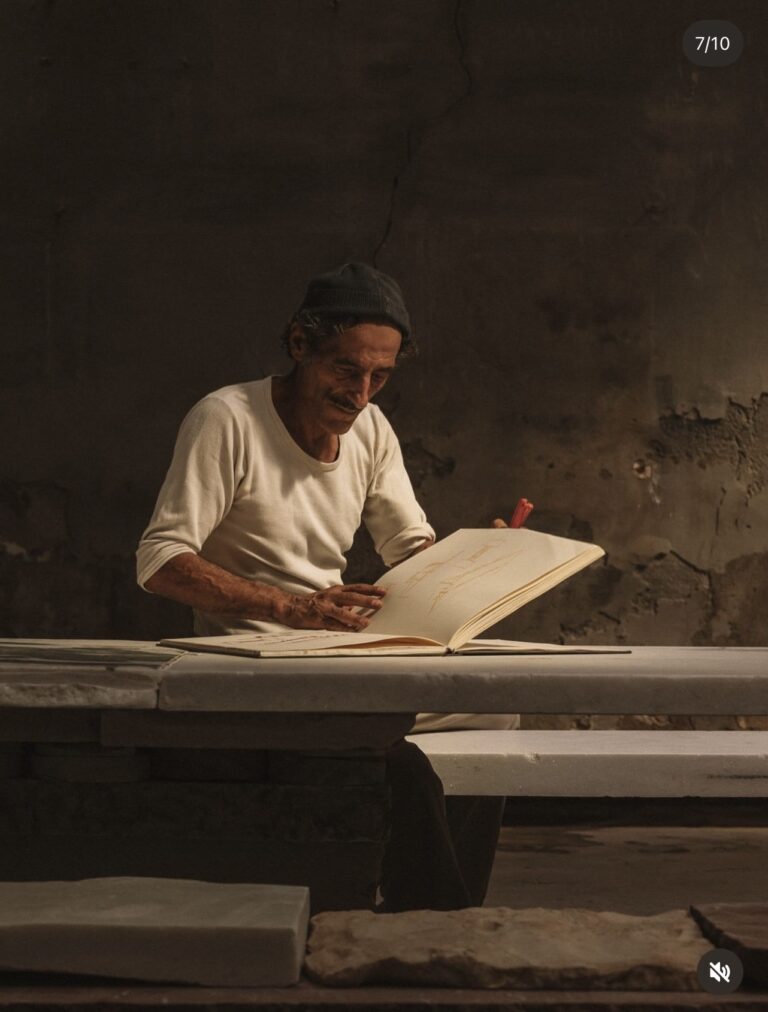
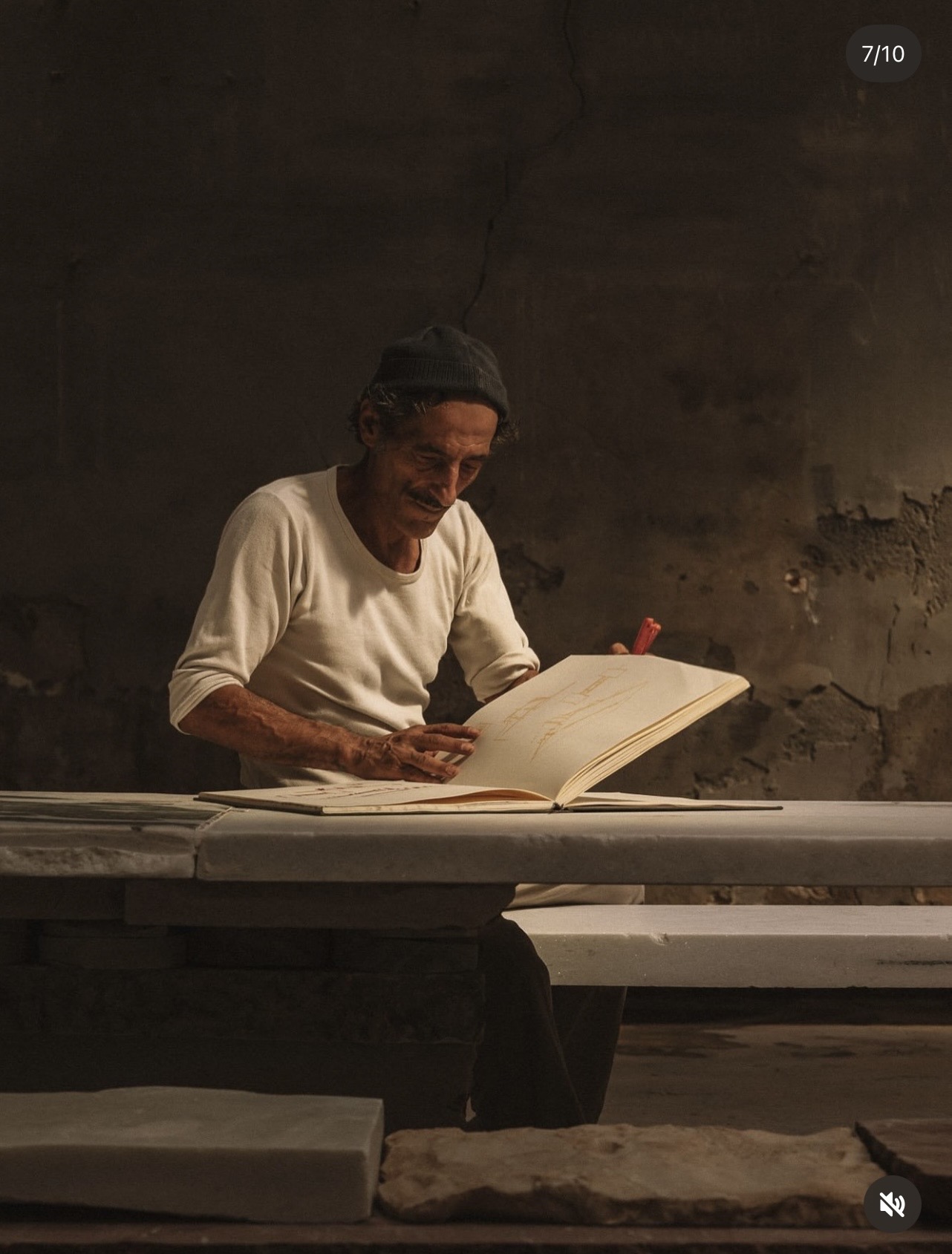
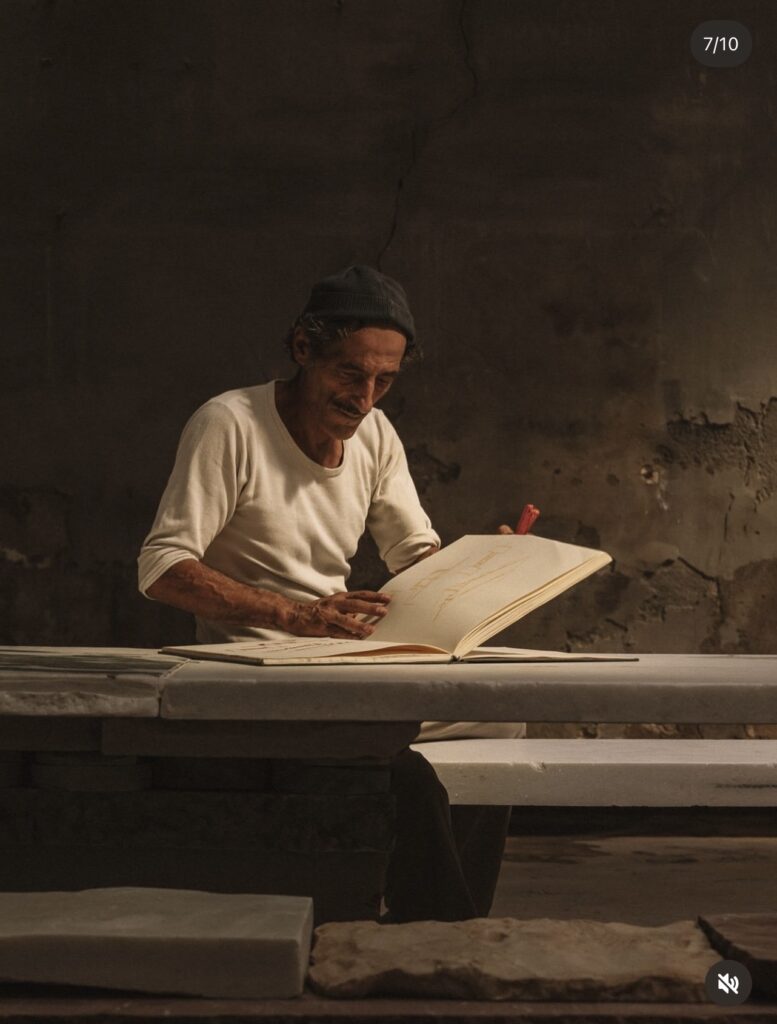
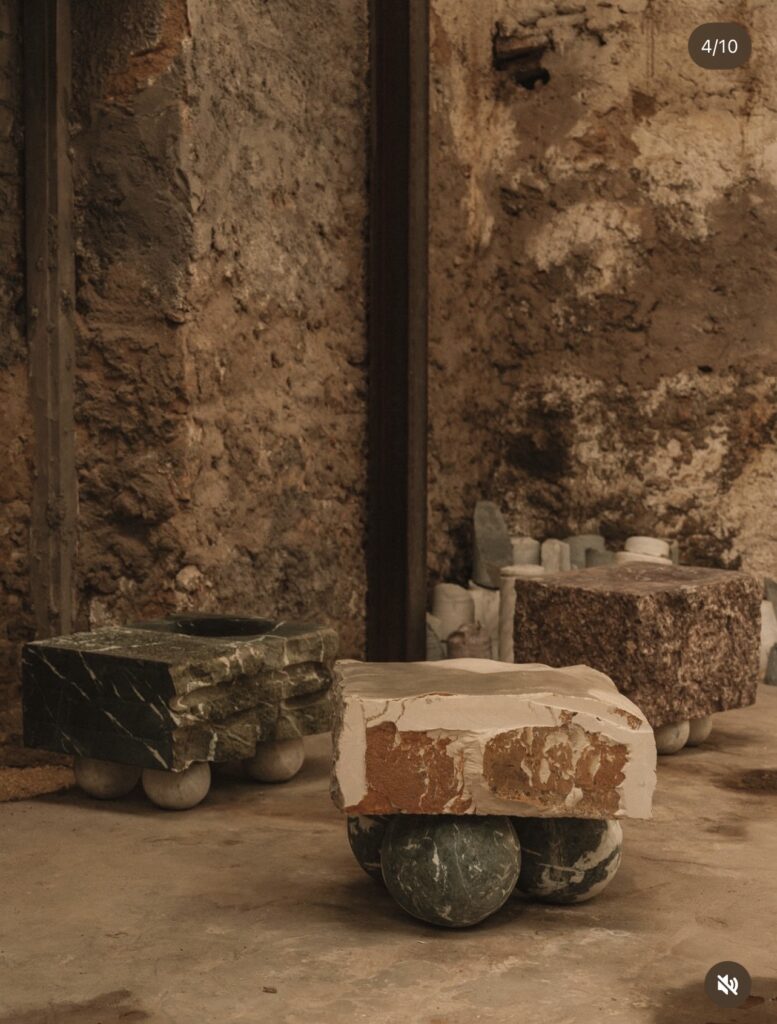
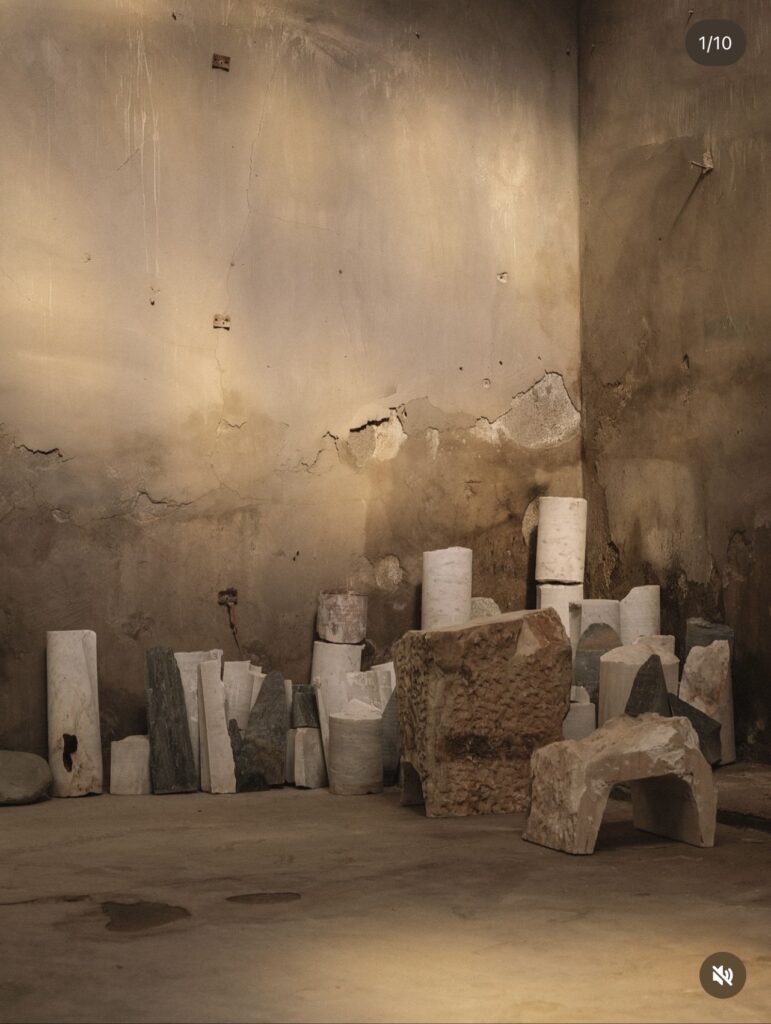
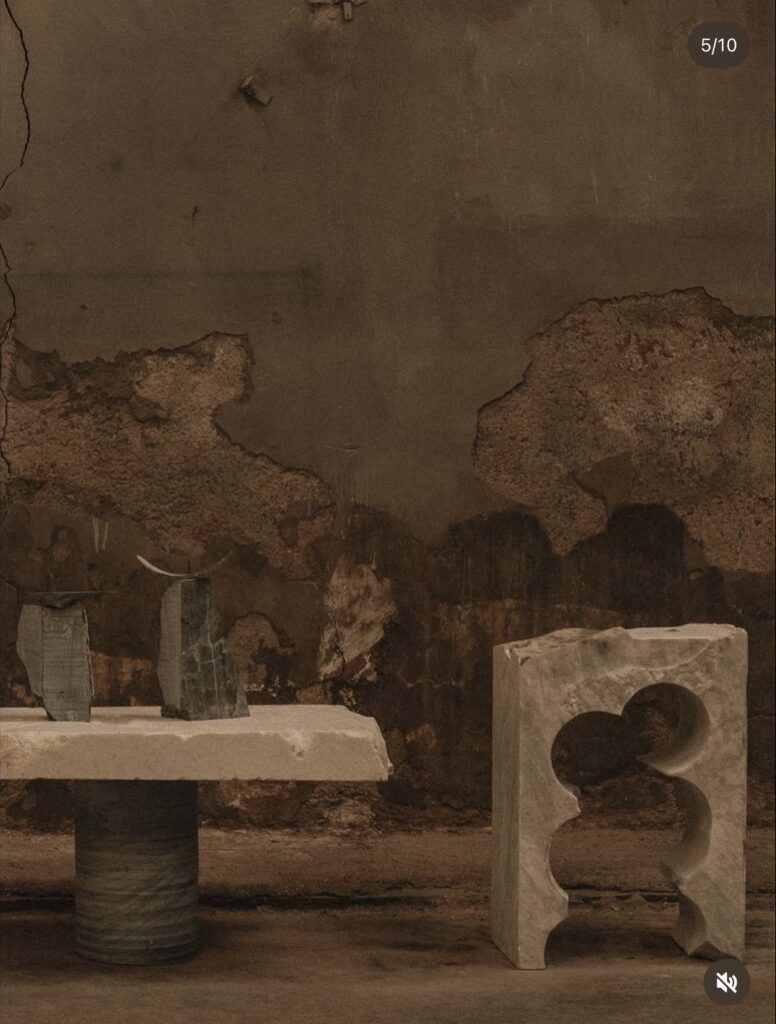
Every so often, you encounter an artist whose work changes the way you see spaces—not because it is polished or pristine, but because it feels profoundly alive. That was my experience discovering the Greek sculptor Psychoyos, an artist who breathes new life into forgotten materials the way designers breathe new life into forgotten rooms. Deep within the abandoned quarries of Greece, he builds his world from remnants: fractured blocks, discarded off-cuts, and stones shaped by time and human touch. Where others see waste, he sees beginnings. For him, marble’s brokenness is not a flaw; it is history waiting to be reimagined. His sculptures feel unearthed rather than constructed, ancient yet undeniably modern, transforming weight into play and stillness into movement.
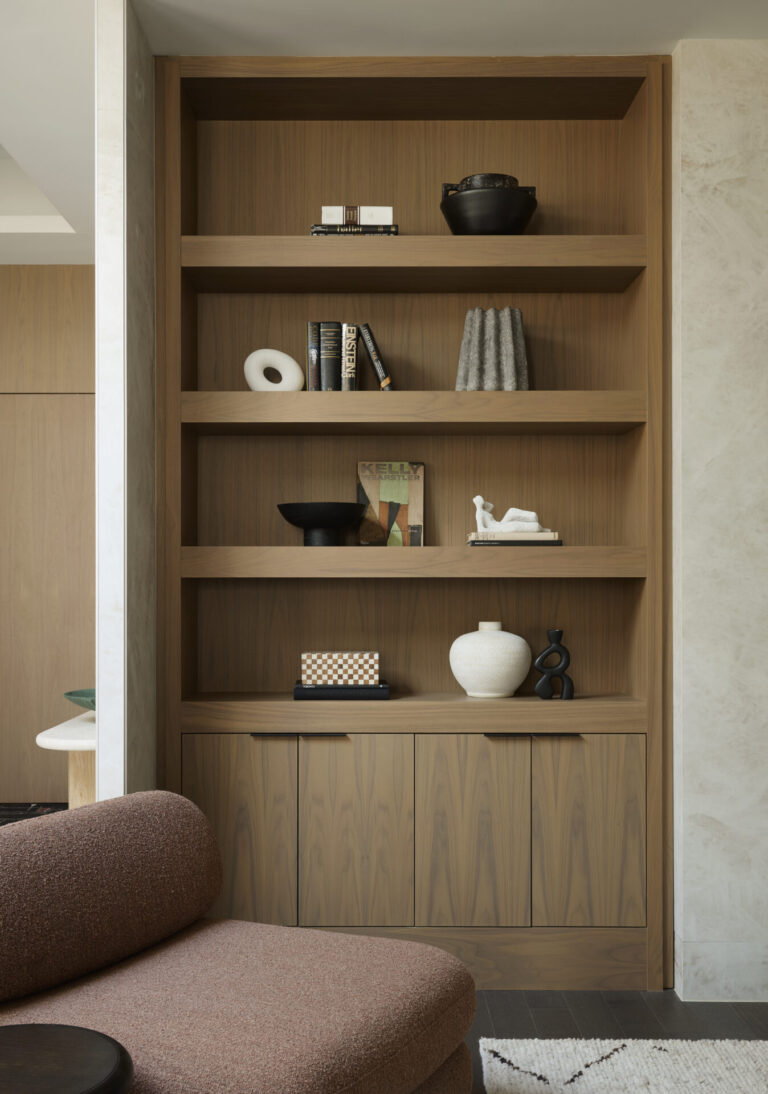
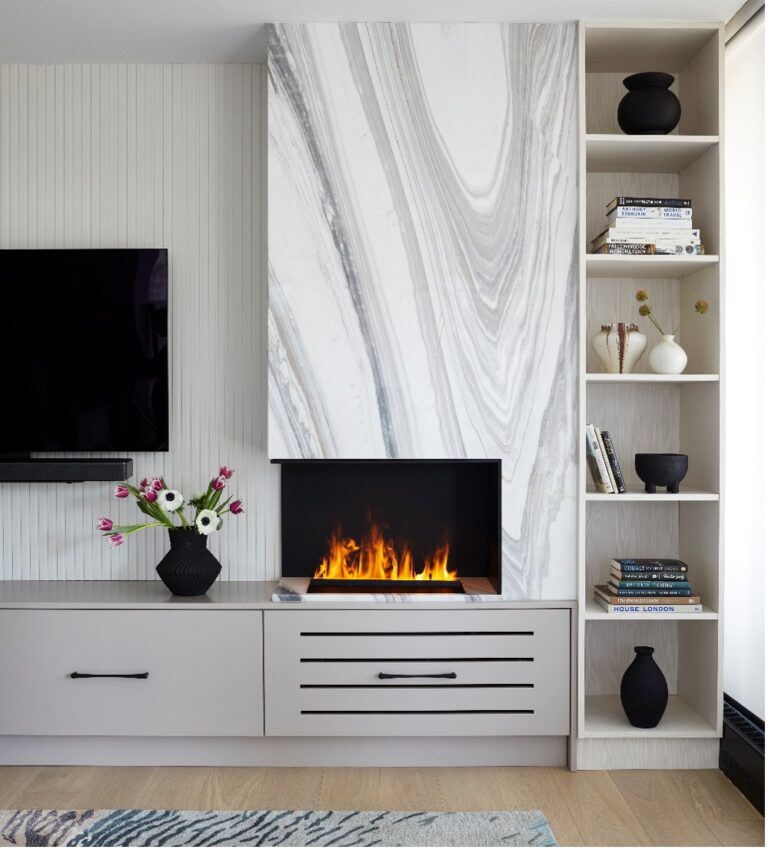
This instinct—listening to what already exists and letting it guide what comes next—is where his practice and interior design meet. Designers and sculptors are both choreographers of space. We work with form, light, material, and memory, asking them to speak to one another. Psychoyos approaches marble the way a designer approaches an unloved home: with reverence for its scars, curiosity for its potential, and a commitment to revealing its truest character. His pieces don’t just inhabit a room; they activate it, grounding the modern, softening the minimal, enriching the traditional, and giving every style a deeper sense of presence.
What moves me most is his devotion to material memory. Each scratch and fracture is honoured, not hidden. This philosophy mirrors renovation at its best—the belief that beauty often lives not in perfection, but in authenticity. When we take an outdated, overlooked, or forgotten space and let it breathe again, we are doing what Psychoyos does with marble: preserving what matters, transforming what’s ready to evolve, and creating something more soulful than what existed before.
Stepping into his studio felt like entering a quiet ritual site, where fragments waited patiently to be transformed. In that moment, I understood why his work resonates so deeply with interiors. Psychoyos does not sculpt marble—he listens to it. And when his pieces enter a space, the room listens too. Light shifts around them, surfaces respond, and the atmosphere becomes more intentional. In that dialogue between object and interior, we’re reminded that design is not decoration—it is interpretation. And often, the poetry of imperfection is what guides us to create homes that feel alive again.